Welcome to the METABARPARK Project website. The project aims to apply the new high throughput sequencing technologies to characterize benthic communities in the Spanish Marine National Parks using environmental DNA (metabarcoding). Our main objective is to characterize the hidden biodiversity which is usually overlooked by traditional methods. We will also try to assess the community impacts of invasive seaweeds.

Monday, October 15, 2018

Metabarpark comes to an end


Dear followers of the Metabarpark project, please be aware that the project ended officially in November 2017. We have waited to make this post so that some papers with results could appear and a new project is up and running.

We are proud of the success of the Metabarpark project. We could develop novel metabarcoding methods for the assessment of benthic communities on hard substrata. These methods were applied to representative communities of the two National Parks studied, and a bewildering biodiversity was uncovered. We also proved the adequacy of metabarcoding to detect the less evident impacts (on meio- and micro-organisms) of the presence of invasive seaweeds in sublittoral communities in both Parks.

We are happy to announce that our activity will continue in the framework of a new project funded by the Ministry of Science, the PopCOmics project. In this new project, we seek to continue the development of molecular tools as applied to ecological and conservation issues.

Thanks for having followed this project! Please bookmark the webpage of PopCOmics http://popcomicsproject.blogspot.com/ and watch out for interesting news.


The Metabarpark team


METABARPARK

Monday, May 7, 2018

Results from Metabarpark published!

The paper with the main results of the Metabarpark project has been published in the international journal PeerJ. It is open access and freely accesible at:

https://peerj.com/articles/4705/


It took us a while to get it published, but we hope that the scientific community will appreciate these results and the new application of metabarcoding techniques to natural benthic communities.

The article is dedicated to Alex Macía, owner of the Cíes Diving club, who provided logistics in the Atlantic Islands, and who recently died while following his passion for diving.

The supplementary material of the article includes the updated MOTU tables that summarize the biodiversity found in the two National Parks during our samplings.

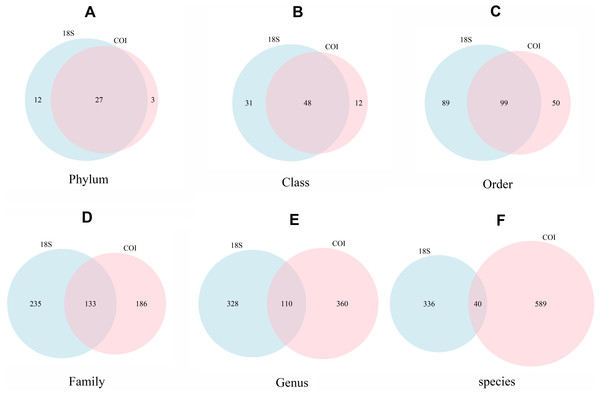
Venn diagrams showing the number of different taxa recovered with 18S (blue) or COI (red) at different taxonomic ranks.

Friday, December 29, 2017

Results of the study of invasive algae published in Marine Pollution Bulletin

We are happy to report that the results concerning the invaded vs non-invaded communities sampled in 2015 have now been published in the international journal Marine Pollution Bulletin (MPB 127: 54-66, 2018).

Elsevier kindly provides a 50 days free access (starting 21 Dec) to this article at https://authors.elsevier.com/a/1WG02,ashmKxI
After this period you will need a subscription to be able to download it


In this paper we report on the effect that invasive algae have at the community level, targeting mainly the smaller size components (small macrobenthos and meiobenthos), using the 18S and the COI genes and the fractionation procedure and bioinformatic pipeline developed in our project. Here goes the abstract:

We analysed with multigene (18S and COI) metabarcoding the effects of the proliferation of invasive seaweeds on rocky littoral communities in two Spanish Marine Protected Areas. The invasive algae studied were Caulerpa cylindracea, Lophocladia lallemandii and Asparagopsis armata. They are canopy-forming, landscape-dominant seaweeds, and we were interested in their effects on the underlying communities of meiobenthos and macrobenthos, separated in two size fractions through sieving. A new semiquantitative treatment of metabarcoding data is introduced. The results for both markers showed that the presence of the invasive seaweed had a significant effect on the understory communities for Lophocladia lallemandii and Asparagopsis armata but not for Caulerpa cylindracea. Likewise, changes in MOTU richness and diversity with invasion status varied in magnitude and direction depending on the alga considered. Our results showed that metabarcoding allows monitoring of the less conspicuous, but not least important, effects of the presence of dominant invasive seaweeds.

Images of the communities analysed, with (left) and without (right) invasive algae. A,B: Cc (Caulerpa cylindracea) communities. C,D: Ll (Lophocladia lallemandii) communities. E,F: Aa (Asparagopsis armata) communities. Pictures: (A) from Eneko Aspillaga; (B,F) from the authors; (C,D) from Pol Capdevila; (E) from Enric Ballesteros


Results from Metabarpark samplings published in PeerJ Preprints


While the article is being peer-reviewed, we have published the manuscript in Pre-print format in the repository PeerJ Preprints, where it is freely available at https://peerj.com/preprints/3429/


METABARCODING LITTORAL HARD-BOTTOM COMMUNITIES: UNEXPECTED DIVERSITY AND DATABASE GAPS REVEALED BY TWO MOLECULAR MARKERS

Wangensteen OS, Palacín C, Guardiola M, Turon X (2017) PeerJ Preprints 5:e3429v1


We report in this manuscript the astonishing diversity found in communities from Islas Cies and Cabrera. We address several technical aspects, compare the two genes studied (18S and COI), and perform ecological analyses. Here goes the abstract:


We developed a metabarcoding method for biodiversity characterization of structurally complex natural marine hard-bottom communities. Novel primer sets for two different molecular markers: the “Leray fragment” of mitochondrial cytochrome c oxidase, COI, and the V7 region of ribosomal RNA 18S were used to analyse eight different marine shallow benthic communities from two National Parks in Spain (one in the Atlantic Ocean and another in the Mediterranean Sea). Samples were sieved into three size fractions from where DNA was extracted separately. Bayesian clustering was used for delimiting molecular operational taxonomic units (MOTUs) and custom reference databases were constructed for taxonomic assignment. We found unexpectedly high values for MOTU richness, suggesting that these communities host a large amount of yet undescribed eukaryotic biodiversity. Significant gaps are still found in sequence reference databases, which currently prevent the complete taxonomic assignation of the detected sequences. Nevertheless, over 90% (in abundance) of the sequenced reads could be successfully assigned to phylum or lower taxonomical level. This identification rate might be significantly improved in the future, as reference databases are updated. Our results show that marine metabarcoding, currently applied mostly to plankton or sediments, can be adapted to structurally complex hard bottom samples, and emerges as a robust, fast, objective and affordable method for comprehensively characterizing the diversity of marine benthic communities dominated by macroscopic seaweeds and colonial or modular sessile metazoans, allowing for standardized biomonitoring of these ecologically important communities. The new universal primers for COI can potentially be used for biodiversity assessment with high taxonomic resolution in a wide array of marine, terrestrial or freshwater eukaryotic communities.

Percent of MOTUs found for the main categories of organisms in the three fractions (A, B, C) studied with 18S (left) and COI (right) in all communities studied

Tuesday, July 11, 2017

Metabarpark at the Pint of Science festival in Blanes


The Pint of Science festival aims to deliver interesting talks on the latest science research in an accessible format to the public – mainly across bars and pubs (preferably with a pint of beer in hands). It is an International festival being held annually over three days at the same time in hundreds of cities across the world. Blanes, the host city of the CEAB, has participated for the first time in this year’s Pint of Science festival. The scientists of the CEAB gave nine talks three evenings (15-17 May 2017).

Xavier Turon participated in the first day of the festival, presenting the opening talk at a nice bar (Casal la Cooperativa) on the topic: Biodiversity 2.0: genetics and computers to study the living organisms. His talk introduced the topic of the ongoing sixth extinction caused by human pressures, and how computer science and genetics can help mitigating these effects. In particular, how we should complete biodiversity inventories as a first step towards conservation. The examples presented drew mainly from results obtained in Metabarpark.

It was an enjoyable and challenging experience to try to explain in lay terms some complex analysis we do in our research. The audience was very interested and asked many relevant questions after the talk.


The banner of the festival in Blanes

Monday, March 13, 2017

Metabarpark at the meeting "Developing new genetic tools for bioassessment of aquatic ecosystems in Europe"

Metabarpark was present at the meeting on metabarcoding held in Essen (Germany) in March 7th-9th 2017. This was the kick-off conference of the European Union COST action DNAqua-Net (http://dnaqua.net/).

This project aims at integrating a group of researchers across disciplines with the task to identify gold-standard genomic tools and novel eco-genomic indices and metrics for routine application for biodiversity assessments and biomonitoring of European water bodies. It also envisages training and dissemination activities. The objectives of Metabarpark are fully compatible with the goals of DNAqua-Net and we wanted to be counted in and contribute.

Xavier Turon is one of the Spanish members of DNAqua-Net and attended this conference, where ca. 200 researchers gathered together to present results, discuss hot topics, and delineate the way forward for achieving a wide acceptance by management bodies of genetic methods for biodiversity assessment in the European context.

Xavier presented the communication "Under the canopy: community-wide effects of invasive algae in marine protected areas revealed by metabarcoding", by Xavier Turon, Owen Wangensteen, Emma Cebrian and Creu Palacín. In this contribution the main results concerning the effects of three invasive algae (Caulerpa cylindracea and Lophocladia lallemandii in Cabrera, and Asparagopsis armata in the Atlantic) on the benthic communities were exposed. We have also drafted and sent a manuscript for publication with these results. This contribution is also the first result of the collaboration between the National Park projects Metabarpark and Corclim.

The logo of DNAqua-Net


A heatmap representation of the samples of communities with and without Asparagopsis armata from Cíes Islands, separated by invasion status (green: non-invaded, red: invaded) and fraction (blue: macrobenthos; turquoise: meiobenthos)

Friday, November 18, 2016

Metabarpark at the meeting "Jornadas de Investigación en la Red de Parques Nacionales 2016”


On October, 18 to 20, 2016 the meeting “Jornadas de Investigación en la Red de Parques Nacionales 2016” was held in the National Park of Tablas de Daimiel in Ciudad Real. This meeting gathered together staff from the OAPN central services, from the different National Parks, members of the Scientific Committee of the OAPN, and researchers that are developing projects in the National Park Network. The results of 13 projects corresponding to the 2013 call were presented in public talks, and there were also technical talks about programs currently underway in the Parks Network.

Xavier Turon gave a talk about the Metabarpark project, presenting the main findings and highlighting the potential of the genetic information for mid- and long- term biomonitoring of the communities.

This meeting has been a very good occasion for sharing experiences and discussing with colleagues and Park managers. Among the attendants were the staff from the Atlantic Islands Park (Pepín, Mercedes, Vicente), and many other acquaintances. It was such a pleasure to meet them all! I cannot resist mentioning also the fine gastronomy we enjoyed and the nice visit to the Tablas de Daimiel National Park that we did.

Family foto of the attendants to the meeting

Sunday, September 25, 2016

METABARPARK at the XIX Iberian Marine Biology Symposium

From 5th to 9th September the XIX Iberian Marine Biology Symposium was held in Porto (Portugal). It was organized by the CIIMAR - Interdisciplinary Centre of Marine and Environmental Research -, and gathered together ca. 180 scientists from Spain, Portugal, and some latin-american countries.

The webpage of the symposium is available http://siebmxixciimar.wixsite.com/business-conferenc-1

The Iberian meetings have been organized since 1978, and are an excellent opportunity for researchers in the Iberian zone to meet, exchange ideas, and present ongoing projects and results.

Three members of Metabarpark (Owen Wangensteen, Creu Palacín, and Xavier Turon) attended the meeting. They presented the oral contribution "Wangensteen, Guardiola, Palacín, Turon: Molecular biodiversity assessment of marine hard-bottom communities from Spanish National Parks by metabarcoding of COI and 18S" where a summary of the main findings of the Metabarpark project was given. The presentation raised a lot of interest among the audience, as shown in the questions posed after the talk and the many interactions that followed during the meeting.

Xavier Turon also presented a plenary conference, entitled "Twenty-five years of genetic studies of the Iberian benthos: retrospect and prospect". Needless to say, metabarcoding was among the main techniques highlighted during this talk.

The nice logo of the XIX SIEBM
We had a good and fun time in Porto, we made interesting contacts for future metabarcoding studies. We are looking forward to the next Iberian Meeting, to be held in Faro in 2018!

Sunday, April 10, 2016

Metabarcoding reveals significant differences in communities with and without invasive seaweeds

While the data corresponding to the 2015 collecting trips are being analysed, we would like to share the first results concerning the communities sampled with and without invasive algae. In the Cíes Island, we compared the photophilous community with Cystoseira nodicaulis (natural assemblage) with equivalent communities with the introduced Asparagopsis armata. In Cabrera, we sampled in the same walls photophilous natural assemblages as well as communities dominated by Lophocladia lallemandii, while at deeper waters we sampled the natural sciaphilous community and Caulerpa cylindracea-dominated patches.

We identified with the gene 18S 2937 MOTUs in these communities. Our statistical analyses showed clear qualitative and quantitative differences between assemblages with and without the invasive seaweeds. While this was expected for the bigger size fractions, even for the smallest fraction (i.e., organisms between 1 mm and 65 microns) the differences were significant. This rich component of the biodiversity cannot be efficiently assessed with conventional methods, while genetic techniques have allowed its quantification and analysis.

Thus, metabarcoding revealed community shifts affecting even the small-sized meio-organisms (animals, algae, and protists) at very reduced spatial scales (tens of meters). The presence of invasive algae has therefore profound effects in community structure at all levels. This is one of the several interesting outcomes we are finding with our data, more soon!
This spatial representation (Multidimensional Scaling) allows the visualization of the differences between the sampled communities linked to the presence of invasive seaweeds


The methods developed in METABARPARK explained in an international book chapter


Owen Wangensteen and Xavier Turon have been invited to write a chapter in the book "Marine Animal Forests. The Ecology of Benthic Biodiversity Hotspots", of the Springer International Publishing Company (ISBN: 978-3-319-17001-5), which is edited by Sergio Rossi, Lorenzo Bramanti, Andrea Gori and Covadonga Orejas.

In this chapter, entitled "Metabardoding techniques for assessing biodiversity of marine animal forests", Owen and Xavier explain the methods developed in METABARPARK to work with hard bottom communities using metabarcoding. We believe that it is crucial to setup standardized protocols, and that this book can be an excellent platform to share and disseminate our experience with the different steps of the metabarcoding process. 

This chapter has been sent out for editorial process, and we foresee that it will be published in the forthcoming months.


Techniques developed in METABARPARK, such as the size fractionation of the samples, can be adopted by other teams working on metabarcoding of marine benthos


METABARPARK at the workshop “Application of genomic tools for benthic monitoring”


The 4-5 April 2016, the Natural History Museum of Geneva (Switzerland) hosted the workshop “application of genomic tools for benthic monitoring of marine environment: from technology to legal and socio-economic aspects”, organised by Prof. Jan Pawlowski of the University of Geneva (http://goo.gl/forms/V9bLHtyJBk).

The workshop was intended as a forum for the exchange of ideas about the potential of environmental DNA (eDNA)-related techniques for assessing biodiversity and the impact of human activities on it. It was attended by environmental professionals, members of regulating bodies, and scientists.

The presentations and discussion were very lively, and the overarching idea is that DNA-derived indicators may be effectively used in the field of environmental monitoring (as they are in other applied sciences). However, more development and standardization is necessary before they can be integrated with- or substitute altogether- current techniques using morphology-based indicators, which are slow, time-consuming, and reliant on a worlwide dwindling taxonomic expertise.

Xavier Turon and Owen Wangensteen contributed to the workshop with the talk “Issues in metabarcoding of marine benthos”, where they pinpointed some conflicting issues, such as the use of DNA vs RNA, the choice between 18S rDNA or COI markers, or the use of a fixed vs a variable threshold for clustering sequences into MOTUs. The talk was illustrated with results obtained in the project METABARPARK.


Xavier Turon and Tom Wilding, of the Scottish Association for Marine Science, at the entrance of the Natural History Museum, with a lovely pet!

Wednesday, January 20, 2016

Working with the data


We processed the samples, extracted the DNA and amplified the barcoding genes for the second sampling (2015) performed at each site. We received the sequences in November (for the COI gene) and December (for the 18S gene). So we have now all genetic data of the samplings done in 2014 and 2015 in Cíes Islands and the Cabrera Archipelago.

In the last months we have been busy working with the bioinformatic analyses of such a huge amount of data. We had to adapt and improve existing pipelines, write code ourselves, and check different approaches at each step of the process.

Now we are drafting our first manuscript for publication with the results of the first samplings with biodiversity assessment and community comparisons within and between the Parks. We have also assembled a large dataset with all sequences obtained in 2014 and 2015 that is currently being analysed to assess temporal changes in the community structure in both Parks. We hope to come up with interesting results soon!


Master Thesis with Metabarpark results


In November, 2015, Manuel Orobitg, student of the Master of Oceanography and Management of the Marine Environment at the University of Barcelona, presented his MSc Thesis “Morphology vs metabarcoding. A comparison of techniques for biodiversity assessment in Maërl beds”, supervised by Xavier Turon, Creu Palacin and Owen Wangensteen.


Image of the sampling of the Maërl community in Islas Cíes
In this study, Manuel analysed morphologically samples collected at the same time as the ones for the genetic studies in the detritic bottoms of Islas Cies and Cabrera Archipelago. He focused his analyses on three major groups: polychaetes, arthropods, and molluscs. He identified at the lowest level possible, with the help of taxonomists (a big thanks goes to Daniel Martin and Lídia Delgado), the species present in the 10 and 1 mm filtrates, and obtained biomass values by weight. The morphological analyses found 77, 45, and 44 morphospecies of polychaetes, crustaceans, and molluscs, respectively, while the genetic technique yielded 182, 245, and 70 MOTUs, respectively, for the same size fractions. Thus, metabarcoding allowed the determination of a higher diversity, but the taxonomic precision attained was higher with morphology. On the other hand, all structural parameters (biomass dominance curves, alpha- and beta-diversity patterns) were markedly different between the metabarcoding and the morphology datasets, indicating that both methods capture different aspects of the biodiversity structure present. The morphological datasets tended to be quantitatively dominated by a few species, while metabarcoding detected a more even distribution of biomass of the dominant MOTUs.

Assortment of arthropods from the 1 mm fraction


Monday, November 23, 2015

Project Metabarpark in IRBio Seminars

Project Metabarpark will be present in the talk session hosted by IRBio (Institute for Research in Biodiversity) at the School of Biology of the University of Barcelona, this Thursday 26th of November.

Xavier Turon will talk about "Biodiversity crisis and the taxonomic impediment: what the metabarcoding of communities has to offer" and Owen Wangensteen will follow with a talk about "Metabarcoding of marine hard-bottom communities, the unseen biodiversity".

The entrance is free and you are all invited!


Thursday, November 5, 2015

Metabarpark at the Course “New Technologies applied to the control and monitoring of invasive species”

In October, 19 to 23, the Spanish National Parks managing organisation (“Organismo Autónomo Parques Nacionales”) organised a course on new technologies applied to the study of invasive species in Vigo (Galicia). This course was attended by staff, technicians, and rangers of the National Parks in Spain.


Xavier Turon was invited to give a lecture about “Genetic tools and invasive species”. It was an enjoyable experience, with interested audience that posed clever questions. It was also a pleasure to meet again the friends of the Parque Nacional de las Islas Atlánticas (Pepín, Vicente, Mercedes…), thanks for your hospitality, as always!

Second collecting trip in Cabrera done!

In October, 2 to 8, we made the second sampling foreseen in the workplan in the Cabrera Archipelago National Park. As in the previous year, we organized a joint trip with members of the CORCLIM project. In this way we optimized costs and logistics, and of course it was an excellent opportunity for interaction and exchange of experiences.

From left to right: Xavier Turon, Pol Capdevila, Kike Ballesteros... in action (foto: Eneko Aspillaga)

The always blue waters of Cabrera (foto: Eneko Aspillaga)

In this trip we worked again in the Imperial Islet, where we sampled the same communities as in the previous year. In addition, we got samples from a community dominated by the invasive seaweed Caulerpa cylindracea at 30 m depth. Weather was far from perfect, and we had to cope with some unexpected problems such as the breakdown of the compressor, but we finally managed to get back with all samples foreseen.

An image of the community dominated by Caulerpa cylindracea (foto: Eneko Aspillaga)


By now, all samples collected in Islas Cíes in May and in Cabrera in October have been processed, sieved into size classes, their DNA extracted, and we are working in the amplification of the two genes chosen, 18S and COI. In one-two weeks we expect to send the samples to Fasteris (Switzerland) for parallel sequencing.

Saturday, September 5, 2015

The importance of being barcoded

by Owen S. Wangensteen

When, back in 2003, Canadian biologist Paul Hebert proposed the creation of a public database of short sequences aimed at identifying biological specimens by means of just these small sequences (DNA-barcodes), he did not find the unanimous response anyone would expect nowadays. Detractors were many and they actually made a lot of scientific noise. In fact, as Laurence Packer once pointed, scientific papers published from 2004 to 2007 criticizing and opposing DNA-barcoding were more numerous (and had more citations) than papers written by the first “barcoders” who embraced the idea. Then, a miracle occurred: as the public databases grew, DNA-barcoding started to prove its utility in a myriad of forms. From long-disputed basic taxonomy issues to medico-legal forensics, passing through river ecology, agricultural sciences, control of disease outbreaks, food security or biodiversity conservation, all took advantage of DNA-barcoding in ways only a few would have dreamt of some years before. 

The reticences were mainly based in some false concerns and a few ancestral fears. Morphological taxonomists argued that no small-sequence could replace their meticulous, morphological observations and thorough interpretations, while internally fearing to lose their jobs. Geneticists argued that genomes were way too complex to be reduced to just a three-hundred base-pairs sequence. Ecologists thought that molecular methods were too expensive and beyond their field of expertise. All of them were basically wrong. 

DNA-barcoding does not plan (and is never going) to replace taxonomists. At its best, DNA-barcoding is meant to replace traditional identification keys (which were probably bound to disappear anyway!). Identification keys are usually a nightmare even for expert taxonomists and are completely useless for specious groups including thousands or tens of thousands of species. DNA-barcoding will only facilitate the work of taxonomists, which are still needed (in fact, more needed than ever) for identifying problematic specimens. Given the estimations for the global number of species and the current description rate of new species, we will need taxonomists, at least, for the next 500 years, or probably much longer. This is more than most scientists working in other areas of knowledge could bet. 

It is true that genomes of non-model organisms are large, complex, gigantic monsters waiting to be tamed. But the fact is that all you need for unambiguously identify the species where a specimen belongs is a fragment of just a few hundreds base-pairs of a highly variable genomic region (in most cases, just 200 base-pairs will do!). Mitochondrial DNA (and, specifically, the cytochrome oxidase I gene, COI) has proven its power to achieve this task in many groups of organisms (including animals; other genes are most used for green plants or fungi). If you need your sequences just for identification purposes, all you need is to sequence but 200 base-pairs of COI. Fast and easy. 

And unexpensive. Sequencing costs have done nothing but plummeting over the last three decades and they are predicted to keep decreasing in a month-to-month basis. Astounding sequencing technologies that grew up under the big umbrella of Human Genome Project have already arrived to average-sized laboratories. Nowadays, DNA-barcoding of an unknown specimen is something that a freshman biology student could perform during his/her first lab course. Costs and complexity are no longer valid excuses. 

I recently understood the pivotal importance of barcoding (i.e. the urgent need for getting the sequences from as many different species as you can and depositing them in a public database as soon as possible) when I started analyzing the data we got from bulk-sequencing environmental samples collected in shallow marine hard-bottom communities of selected marine reserves in Spain. This kind of research is crucial to understand how marine communities are changing (and they are changing indeed, probably at a faster pace than we use to think). We need to sample these communities and characterize them as soon as possible, if we want to be able to detect any changes in the near future, before it's too late. The sensible way to do this is by metabarcoding them. That is: get the sample inside a bag, blend it with a kitchen blender, extract the DNA of every organism present in the mixture, use this DNA to amplify a useful genetic marker (COI is the usual choice), and then try to match the millions of sequences you get to the current contents of public barcoding databases, in order to identify the organisms that are present in your samples (and probably their abundances, but that's another story I will be writing some other day). The first steps of this procedure proved to be surprisingly easy. Notably, it is the last identification step which is currently limiting the utility of this technique. We have literally millions of different COI sequences, representing all the biodiversity hidden in our samples, but we are able to identify (give a species name) just a small percentage of these sequences. Marine barcoding databases are not as developed as terrestrial ones. Small and microscopic organisms are much more underrepresented in the databases than big, macroscopic ones. A surprisingly high percentage of marine diversity is yet unknown, even for shallow ecosystems in the Mediterranean or temperate Atlantic European shores, which have been extensively studied by marine biologists, at least since Aristotle. 

If we want to begin to understand the biodiversity changes which are happening now in our beloved marine ecosystems, we really need to undertake the titanic task of sequencing the DNA-barcodes of as many marine species as possible, and release the data to our public databases. I am confident that metabarcoding will become the main tool of marine ecologists in the next few years. We need to extract its full power as soon as possible by expanding our databases and filling the main gaps. This is no task for an individual or a small group of people. Given the overwhelmingly high number of different marine species, this is a task for several hundreds of marine taxonomists, working across the World, identifying species in their different groups of expertise, sequencing data, curating taxonomies, releasing data, and waiting for no bigger reward on these data release but contributing to help other marine biologists in building the greatest and most useful marine taxonomy enterprise of all time. 

As Harry Truman once said, it is amazing what you can accomplish if you do not care who gets the credit. 

Comparing DNA-barcoding vs environmental-DNA metabarcoding approaches to biodiversity monitoring. In DNA-barcoding, a single individual is analyzed, whereas metabarcoding can analyze whole communities by using the power of next-generation sequencing technologies.


References:
Hebert et al. 2003. Biological identifications through DNA barcodes. Proc. R. Soc. Lond. B 270, 313–321. doi: 10.1098/rspb.2002.2218

Monday, August 10, 2015

Metabarpark at the 6th International Barcode of Life Conference at Guelph (Canada)

Metabarpark Project will be present in the 6th International Barcode of Life Conference that will be held at Guelph (Canada), next August 18th - 21st 2015. Our postdoc researcher Owen S. Wangensteen will be presenting our most recent developments of metabarcoding pipelines to study the biodiversity of marine hard-bottom communities with a level of detail never seen before.


Monday, June 15, 2015

Working with the second gene

In March we received the results of the Illumina run performed on our samples amplified for the COI gene. Unfortunately the quality of the reads was no good enough and we had to discard many of them. This led us to ask for a repetition of the run with a new protocol for preparation of the genetic libraries. Fasteris was up to the challenge and repeated the run for free. The results of the new run arrived in May, and this time most of the reads could be used.

With another 14 milion sequences to work with, we are still adjusting our pipelines to meet the specificities of COI. We had to construct a new reference database using the Barcode Of Life Data (BOLD) systems. We hope to have results of this second gene in short!

Recent dissemination activities of Metabarpark

We are committed to disseminate our results to management bodies, researchers, and to the grand public. For this reason, we have recently engaged in a series of divulgative actions that we would like to share here:

# In the recent edition of the International Festival Pint of Science, intended to share scientific knowledge in the fun and relaxed atmosphere of pubs, Xavier Turon presented a talk (with a beer at hand, for sure) at the bar Cara B in the district of Gràcia (Barcelona), the 18th May. The talk was about "deciphering the enigma of biodiversity with genetics", and a good deal of it was centered on the progress of Metabarpark. Cara B was fully packed with interested people!

 http://pintofscience.es/event/barcelona-cara-b-falta-2/

Billboard anouncing the Festival 
# Likewise, Xavier Turon delivered a talk about the project to the managers and staff of the Organismo Autónomo Parques Nacionales (OAPN), funder of Metabarpark, in Madrid, the 22nd May

# Owen Wangensteen participated in the XV International Echinoderm Conference, held at Playa del Carmen, Mexico (25th-29th May), and presented a talk about the applicability of metabarcoding to echinoderms, stemming largely from results of our Project: "Metabarcoding of Echinoderms, promises and pitfalls"

# Xavier Turon spent a couple of weeks at the National Oceanography Centre (NOC) in Southampton for sampling and manuscript writing with colleagues. He was the speaker at the Friday Seminar of the 5th June presenting the talk "Biodiversity crisis and taxonomic impediment: what the genetic metabarcoding of marine communities has to offer", where he presented results of Metabarpark